Get A Quote
Nov 19,2026
Flat-top dots are photopolymer dots that keep a flat printing surface after imaging and washout instead of forming a rounded dome. Because the dot area stays closer to the mask and changes less during processing and under press pressure, the smallest highlights survive and dot gain repeats more consistently from plate to plate. The benefit is real but conditional: it depends on screen ruling, substrate, anilox, ink, and mounting. This article explains what the dot profile changes, where it pays off, and how to verify it before a production run.
For printers evaluating plate options across label, carton, and flexible packaging work, the relevant starting point is the range of photopolymer flexo plates available for different substrate groups.

A conventional digital flexo plate forms dots under an oxygen-inhibited surface. Oxygen slows polymerization at the top of the dot, so the dot polymerizes with a rounded, dome-like crown and a softer edge. During washout and drying, the dot can lose area, and the smallest highlights may disappear entirely. This is why older digital workflows needed back masking or add-on flat-top films to flatten the dot and recover highlights.
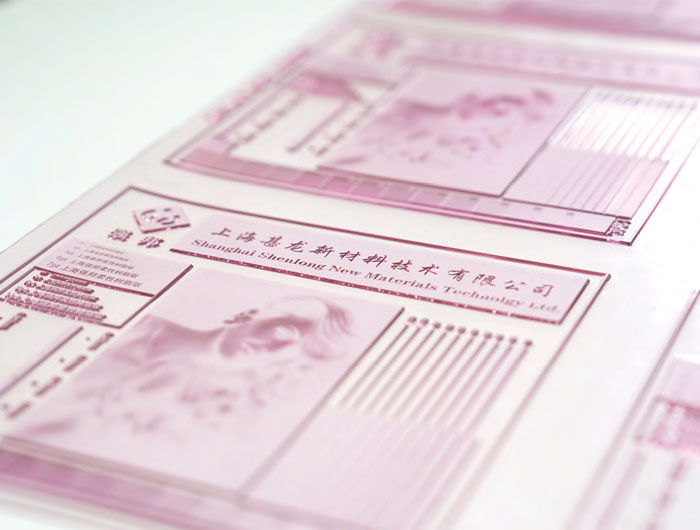
A flat-top dot is formed with the mask in place on the plate during imaging. Because oxygen cannot inhibit the surface in the same way, the dot polymerizes with a flat top rather than a dome. The top surface area is set close to the mask area — plate makers describe this as near 1:1 mask-to-plate imaging — so 1% and 2% dots are less likely to wash away or fill in.
Two clarifications matter for buying decisions. First, "flat-top" describes dot geometry, not plate hardness: a plate can be soft or hard and still carry a flat-top dot, because hardness and dot profile answer different questions. Second, flat-top dots are not automatically present on every digital flexo plates product; they require an in-plate mask or a separate flat-top film step. Buyers should confirm which method the plate uses, since one adds a process step and the other does not.
Published specifications help separate the two. A hard plate with a built-in flat-top profile is documented at 1.70 mm and 1.14 mm calipers, 67 and 75 Shore A, a 1–98% tonal range, 175 LPI, and a 0.15 mm minimum isolated dot. To see how those figures are listed for a specific product grade, review the SF-DFT digital flexo plate specifications.
Highlights hold better. With a flat crown, the dot keeps more of its surface through washout, so 1–2% dots remain open instead of dropping out. On plates that specify a 1–98% tonal range, the practical difference shows up first in gradient skies, skin tones, and the lightest tint steps in brand colors.
Dot gain becomes more repeatable. Dot gain is not caused by dot shape alone. It comes from impression pressure, mounting tape compressibility, cylinder runout, ink viscosity, and substrate absorption. What a flat top changes is the starting point: because the dot's surface area is set closer to the mask, the gain curve begins from a more predictable value, and plate-to-plate variation narrows. It does not remove gain — it makes the gain you do have easier to control.
Ink release can be cleaner. A flat top releases ink more evenly than a domed dot, which supports higher solid ink density without closing highlights. Some flat-top grades, such as SF-DFT, are described by the supplier as very low-tack, which helps on fast runs and light-coated stocks.
The ruling ceiling can rise — but only within a plate family. In STRONG's published range, the hard flat-top SF-DFT grade is specified at 175 LPI with a 1–98% tonal range and a 0.15 mm minimum isolated dot, while the medium-durometer analog SF-GL grade is specified at 133 LPI, 2–95% and 0.25 mm. These are product specifications, not an industry-wide rule: practical ruling depends on plate chemistry, the imaging system, and exposure control.
Flat-top dots earn their cost on smooth substrates and fine, highlight-heavy artwork: labels, tags, folding cartons, flexible packaging, films, and sacks. These are the applications where a hard photopolymer flexo plate with a wide tonal range is usually specified, and where a lost 1% dot is a visible defect rather than a minor variation. For context on how plate choice maps to different packaging jobs, the packaging printing applications section covers substrate-specific requirements.
On corrugated board, the dot profile is not the main lever. Flute valleys and absorbent kraft liners cap practical ruling at roughly 60–100 LPI, and the job is normally handled by soft plates in the 29–49 Shore A range with enough caliper to bridge the board. Flat-top corrugated plates do exist and can help reduce fluting and board crush, but they do not remove the substrate limit — the plate can only print what it can reach.
They also fail to rescue a process problem. If the anilox is worn or mismatched to the ruling, if ink viscosity drifts, if impression is set too heavy to compensate for a bad mount, or if the plate surface is contaminated, a flat-top dot will reproduce those faults with more consistency — not fewer. Flexographic printing plates are one variable in a system that has to be calibrated as a whole.
The two profiles differ in how the dot forms and how it behaves once impression is applied. Neither is universally better; the fit depends on substrate and ruling.
| Aspect | Round (domed) dot | Flat-top dot |
|---|---|---|
| How the dot forms | Oxygen-inhibited polymerization; rounded crown | In-plate mask; flat crown set close to the mask area |
| Highlight survival | Small dots may wash out or fill in | 1–2% dots survive more reliably |
| Dot gain behavior | Sensitive to processing and pressure variation | More repeatable starting point; press gain still applies |
| Imaging steps | Often needs back mask or add-on flat-top film | Built-in where offered; otherwise an extra step |
| Best fit | General work, heavier solids, corrugated | Fine screens on smooth substrates, highlight-heavy work |
The same profile difference shows up in published plate specifications. Figures below are for commonly supplied grades and should be confirmed against the current datasheet for the exact caliper.
| Plate family | Shore A | Tonal range | LPI | Min dot | Best fit |
|---|---|---|---|---|---|
| SF-DFT digital flexo plate 1.70 mm / 1.14 mm |
67 / 75 | 1–98% | 175 | 0.15 mm | Labels, tags, folding cartons, films, flexible packaging |
| SF-GL analog flexo plate 1.70 mm / 2.28 mm |
63 / 54 | 2–95% | 133 | 0.25 mm | Medium-durometer carton and general packaging |
| Corrugated soft plate range SF-DGS / SF-L |
29–49 | 3–95% | 60–100 | 0.25–0.75 mm | Corrugated board, rough or absorbent liners |
Because these checks compare plate against print, they belong with the wider plate quality and inspection process rather than with a single job's sign-off.
No. A round dot polymerizes with a domed crown under oxygen inhibition; a flat-top dot forms with a flat crown that keeps an area closer to the mask. The difference shows up mainly in highlight survival and in how repeatable dot gain is across a batch.
They make the gain curve more predictable rather than smaller. Processing-related dot loss is reduced, so the printed gain starts from a more stable plate dot. Press-induced gain from tape, impression, ink, and substrate remains and still has to be calibrated.
Not by default. Flat-top dots require an in-plate mask or an add-on flat-top film and, in some workflows, an adjusted exposure step. Confirm with the flexo plate manufacturer or supplier which method applies to the grade you are buying.
Partly. Corrugated print quality is limited by the board surface and flute structure, which caps practical ruling and calls for soft, thicker plates. Flat-top corrugated plates can help reduce fluting and board crush, but the profile cannot compensate for a rough, absorbent liner.
No. Dot profile and hardness are separate specifications. Many flat-top plates are hard because they target labels, films, and folding cartons, but soft plates can also be imaged with flat-top profiles where the application calls for it.
For smooth substrates and fine work, a 175 LPI plate with a 1–98% range and a 0.15 mm minimum isolated dot is a reasonable reference point. For corrugated, expect 60–100 LPI and a wider minimum dot. Match the plate to the substrate before matching it to the artwork.
Flat-top dots change the starting point of the print, not the whole process. They keep small highlights open, make dot gain more repeatable across plates, and release ink more cleanly — advantages that matter most on labels, folding cartons, films, and other smooth substrates where fine screens are specified. On corrugated, surface roughness still sets the limit, and plate hardness and caliper remain the deciding specifications.
Before committing, ask for grade-specific datasheets, measure dot area on the plate, and run the impression ladder on your own press and substrate. For a broader view of how plate specifications are checked in production, review the plate quality and inspection process, or discuss your ruling, anilox, and substrate combination with the technical team.
Disclaimer: The information in this article is provided for general guidance only. Plate performance depends on substrate, ink, anilox, mounting, press settings, and operating conditions. Published specifications should be confirmed with the supplier for the exact grade and caliper being purchased, and results should be verified through on-press testing.
GET A QUOTE